
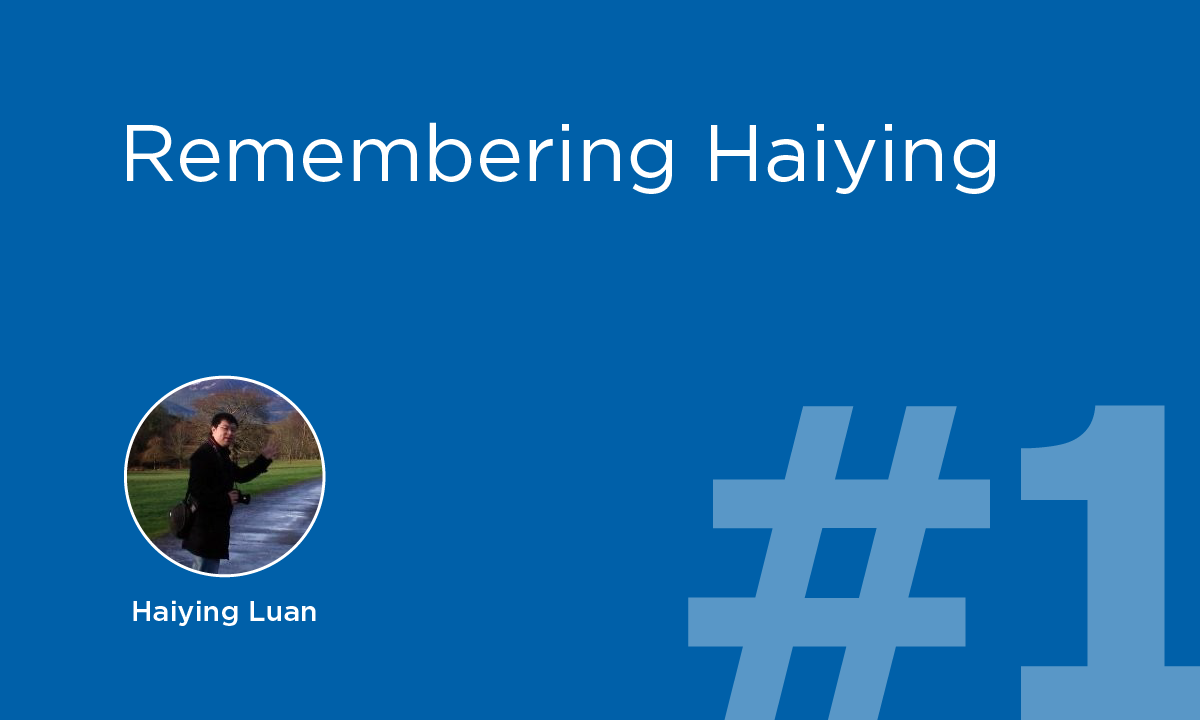
Haiying Lan joined Cellusys in the company's early years and remained part of it for more than a decade. He passed away on 5 April 2020, during the first months of Covid. For those who worked with him, Haiying was not just a colleague — he was part of the fabric of the company.
Many newer people at Cellusys will recognise his presence through the artwork in the Dublin office: the oil painting on the stairwell, the drawings, the photographs, the small details that quietly mark his place here. This piece exists to explain why.
Haiying came to Ireland from China to study, completing two master's degrees in DCU. When he arrived, he spoke very little English. He built a life here anyway — learning the language, navigating a new culture, finding his way through work, friendships, and eventually family life. That quiet determination was characteristic of him.
At work, Haiying did a bit of everything. In the early days, when teams were small and roles were fluid, he moved naturally between development, integration, support, and operations. When something needed to be fixed — especially out of hours — he was often the first person in the car, heading to the office without fuss. During long upgrade cycles, he became a constant presence, announcing "fire in the hole" before running a command, calm and focused while others monitored.
He kept a file simply called Important Things — a living document of commands, notes, fixes, and reminders built up over years. It quietly saved the team more than once. It's still there.
Haiying had no ego. Interns never felt like interns around him. If you suggested something, it was taken seriously. If you didn't understand something, he would explain it — often with patience, sometimes with mischief. He had a habit of deliberately calling people by the wrong name if he knew it annoyed them, and sticking with it purely because it made him smile.
Outside of work, he was endlessly curious and unapologetically himself. He loved food — especially getting the maximum value from it. Buffets were treated as a system to be optimised. Cinema subscriptions were used to their absolute limit. If something was included in the price, he would take all of it, whether it made sense or not. There was joy in beating the system, even if it resulted in eating far too much.
He cooked in the office more than once. Live crabs once crawled across a desk in Princess Street, to the amazement (and mild horror) of nearby interns. Dumplings appeared when his mother visited. Meals were shared, stories swapped, cultures crossed without ceremony.
Haiying was also generous in quieter ways. He helped colleagues learn to drive, navigate Irish bureaucracy, understand unwritten rules. He helped new arrivals from China find their feet because he remembered exactly how hard it had been. When his daughter was born, he threw himself into parenthood with the same earnest problem-solving mindset — including demonstrating potty training by example, to everyone's disbelief and amusement.
At a Christmas event, he once stood up and spoke about what Cellusys meant to him. In a simple, matter-of-fact way, he said the company had become his family. Many people in the room were moved to tears. It was one of the clearest expressions of belonging anyone could remember.
Five years on, his absence is still felt. But so is his influence. The calm under pressure, the willingness to help without being asked, the culture of quietly getting things done — these are not accidents. They were shaped by people like Haiying.
Each year, the Heart of Gold award honours those values. It exists because he embodied them.
Haiying was funny, stubborn, kind, meticulous, generous, and entirely himself. He mattered here. He still does.
